
Juab County Release Meanings
“Released” has several meanings in Juab County. An ordinary local detainee may leave the jail after bond, a court order, time served, probation, dismissal, or a decision not to file charges. The jail may also close its event because another county, UDC, a federal agency, or ICE took custody. That last group did not enter the community. The receiving agency becomes the next place to check.
A UDC prisoner can be housed inside Juab County Jail under the Inmate Placement Program. The sheriff holds the person physically, but UDC and the Utah Board of Pardons and Parole control state legal status. A departure from Nephi may be a transfer to the Utah State Correctional Facility for release processing. County absence alone proves neither discharge nor community release.
- Release
- The end of one agency's custody event, sometimes into the community and sometimes to another custodian.
- Parole
- Conditional release from prison while the state sentence and supervision continue.
- Probation
- Court-ordered supervision in the community, often linked to suspended confinement.
- Discharge
- The completion, termination, or expiration of the controlling sentence or supervision term.
Juab County Release Types
The legal reason for a Juab County release determines which record can confirm it. A jail event supplies the physical out time. A court order explains bond, sentence, dismissal, or probation. A Board order controls a state parole date. A transfer record identifies the next custodian.
| Release type | Meaning | Best next record |
|---|---|---|
| Bond or recognizance | The court permits release while the case continues. | Jail release event and bond order |
| Time served | The ordered local confinement has been credited as complete. | Judgment, credit entry, and jail out time |
| Probation | The person enters court-ordered community supervision. | Court sentence and UDC supervision status |
| Parole | A state prisoner leaves prison under continuing UDC supervision. | Board order and UDC record |
| Dismissal or nonfiling | A charge is dismissed or not filed within the local process. | Court docket, prosecutor action, and jail event |
| Transfer or detainer | Another agency takes custody. | Receiving-agency field and new locator |
Death can also close custody, but it must be reported only when an official record says so. A blank field or missing search result never supports that conclusion. The same rule applies to transfer and release.
Juab County Release Record Fields
A Juab County release record is not one standard form. Sheriff Records may hold a booking history, event log, authorization, bond entry, transfer entry, or part of an incident file. Ask for fields narrowly enough that the office can identify the event and separate public material from protected information.
| Field to request | What it can establish |
|---|---|
| Full name and agency number | Which person and booking or offender record is involved |
| Booking date and time | When the county custody event began |
| Release date and time | When the source agency ended physical custody |
| Release type or authority | Bond, sentence, court order, parole, dismissal, or another basis |
| Charges and case number | The court file connected to the custody event |
| Destination agency | Whether the person transferred instead of entering the community |
| Supervising agency | Whether parole or probation followed release |
Not every field is maintained or public. Juvenile information, private identifiers, medical or victim information, investigative material, and sealed records may be withheld or redacted. Ask for any segregable public portion. Never treat an empty field as proof that no hold, supervision term, or transfer existed.
Request Juab County Release Records
The Juab Sheriff Records Division handles reports, photographs, recordings, and other sheriff records. Its hours are Monday through Friday, 8:00 a.m. to 5:00 p.m., excluding holidays. Call 435-623-1344, Option 3. Mail may be sent to the Sheriff's Office at 425 West Sheeplane Drive, P.O. Box 133, Nephi, Utah 84648.
- Download the official public-safety GRAMA form.
- Give the person's full name, identifying details, date range, and case or booking number when known.
- Ask for the booking and release dates, authority, disposition, destination agency, charges, bond entries, and any releasable photograph.
- Request electronic delivery and a cost estimate before the office produces a large record.
- Read the response for redactions, denial grounds, and any appeal instructions.
The form states $15 for up to ten pages and added cost after ten pages. It also states up to ten business days to provide the record, deny access, or notify the requester that more time is needed. The Records page says fees can vary. Its current Option 3 number should be used because the form header shows a different phone number.
A narrow description improves the chance that staff can locate the right event without unnecessary review. State whether the request concerns a county booking, a UDC prisoner housed under contract, or a transfer. Include the date range and ask for the receiving agency when the person did not enter the community. If a requested item is protected, ask the office to provide the remaining public fields instead of treating the whole request as all or nothing. Keep the response and any fee notice with the court or Board record used to verify the event.
A release record can remain with Records after every public interface stops showing the person; web visibility and agency retention are different questions.
Juab Release Law and Expungement
Utah's Government Records Access and Management Act, or GRAMA, supplies the principal public-record route. Section 63G-2-201 addresses access to public records, while Section 63G-2-204 covers written requests and agency responses. Reasonable fees are addressed in Section 63G-2-203. Juab's own form gives the more useful local fee and response language.
Expungement seals qualifying government case records from ordinary public access. It does not mean the prior custody event was false. Court and agency access rules still control, and copies held outside government are not automatically erased. A person who needs an expunged record must use the limited access route allowed by Utah law or seek court permission when required.
Juab County publishes no online booking history, so there is no verified web-retention period to quote. That absence does not establish that Sheriff Records destroyed the underlying file. Agency retention and public website display are separate. Ask Records for the responsive custody event and, when necessary, the schedule that governs the record. Do not borrow a display period from another Utah county. A sealed or expunged case can further restrict public access even when an agency once held a release entry.
Juab Release Expungement Clock
For a Utah conviction, the waiting period under Section 77-40a-303 generally runs from the latest qualifying event. That may be conviction, release from incarceration, or completion of parole or probation. A Juab County jail release therefore may not start the final clock when supervision continues afterward.
Eligibility also depends on the offense, payment, pending cases, and statutory exclusions. A later disappearance from a public search may follow expungement, full discharge, a data change, or an identity mismatch. It cannot prove no arrest or custody event occurred. Obtain the official order when the legal effect matters.
Find Juab County Released Inmates
No official Juab County online roster or recent-release list was verified. The dependable search path begins with the custody type. For an ordinary jail detainee, call the Juab County Jail at 435-623-1344, Option 2. Ask whether the person remains housed and, if not, whether staff can distinguish release from transfer. Follow with a Records request and the correct court case.
- Confirm the person's identity and decide whether the case was county, UDC, federal, or immigration custody.
- Call the jail for a local detainee, or use the correct official locator for another custodian.
- Get the release or transfer record from the agency that ended custody.
- Read the court judgment or Board order that authorized the legal event.
- Recheck with the current custodian when the record mentions parole, transfer, or a detainer.
For a UDC prisoner, use the state offender search and the Board decision system. VINELink adds notifications but is not sole proof. BOP can preserve former-federal-inmate results. ICE's locator is focused on current detention and is not a historical release archive.
Juab County Offender Search
The UDC Offender Search covers people currently incarcerated by UDC or on UDC parole or probation. It excludes unsentenced county-jail detainees. Search by at least one letter of the first and last name, or use the UDC number. Open the matching result and compare identifiers before reading status or date information.
| Search element | Use and limit |
|---|---|
| First and last name | Both need at least one letter; add detail to reduce name collisions |
| UDC number | Direct identifier for a known state record |
| Legal status | May distinguish inmate, parolee, or probationer |
| Parole/release date | A current future date is subject to Board and UDC change |
| No result | May mean mismatch, delay, complete discharge, or another jurisdiction |
The official landing page does not promise a field literally called “Projected Release Date.” UDC release instructions use “Parole/Release date.” A future date is not completed release. Confirm it through the Board order, then check with UDC on or after the operative day.
The official UDC screen shows the current-supervision scope and search inputs. Review that source before searching.
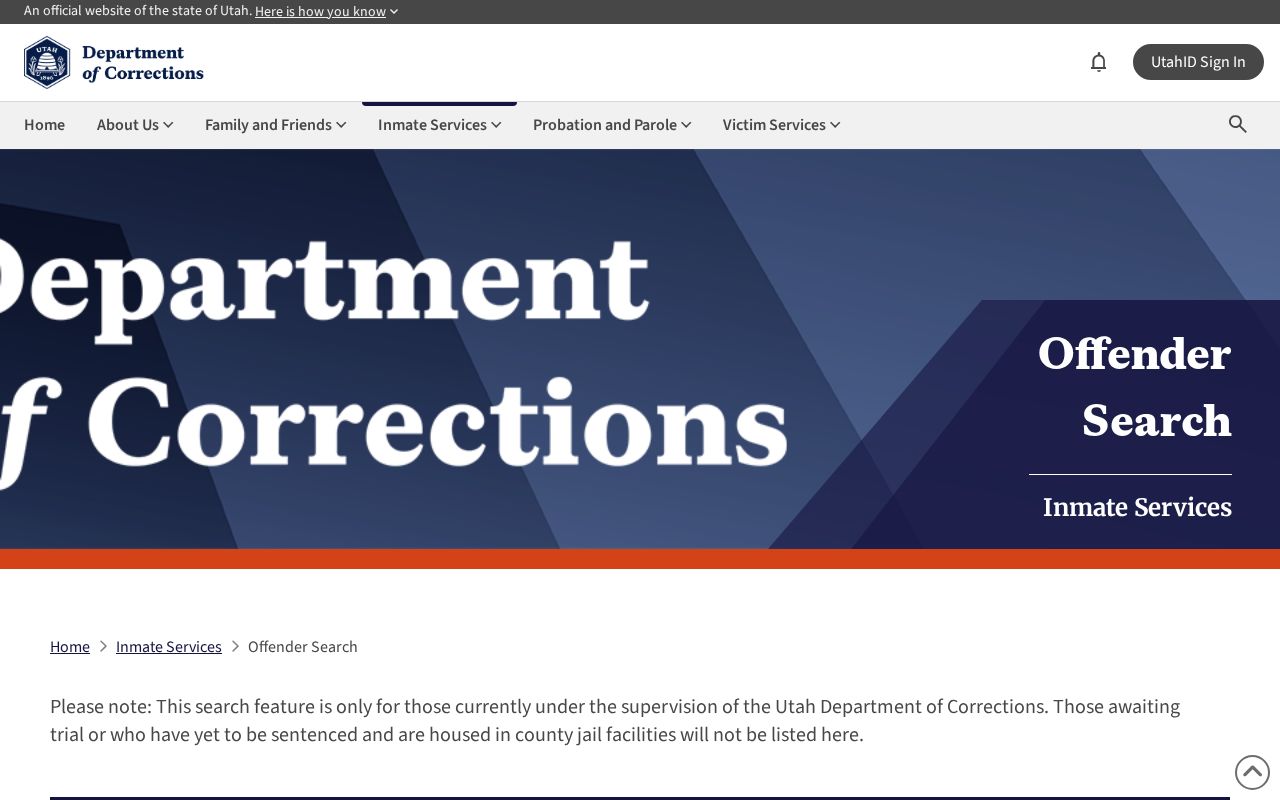
Its scope explains why a local pretrial detainee and a fully discharged former state offender may both be absent for different reasons.
Two Juab Release Record Systems
Juab's Inmate Placement Program creates an unusual split. A local detainee and a state prisoner can occupy the same county building while belonging to different legal systems. County jail staff and the local court control the local record path. UDC, the Board, and AP&P control the state-prison path.
The UDC placement program explains why state prisoners can be held in participating county jails. The official page captures that distinction.
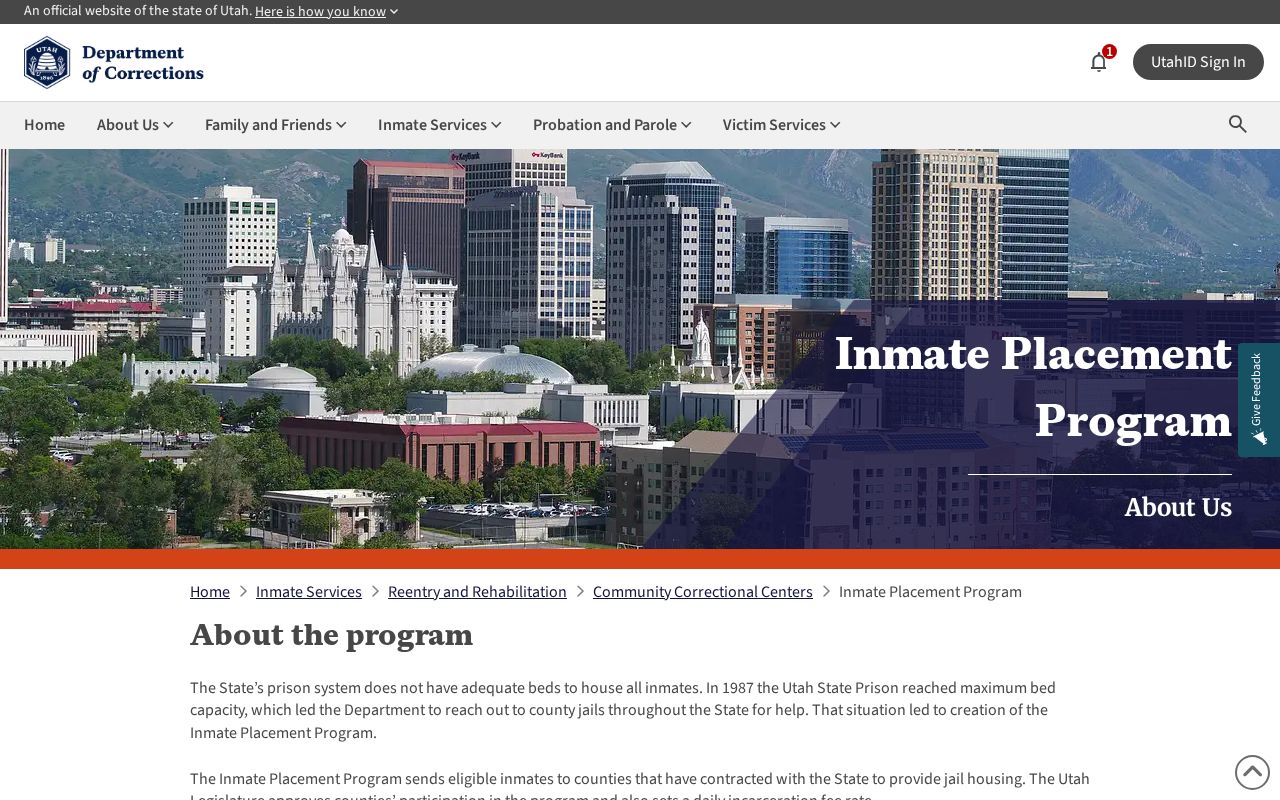
A Juab jail departure for a UDC prisoner commonly means movement to the state release site, not a direct walk into the Nephi community.
Tuesday Utah Releases from Juab
UDC says state prison releases and paroles are generally processed on Tuesdays. Almost all UDC prisoners housed in county jails are first routed to the Utah State Correctional Facility. The Release Fair uses different arrival times by housing origin and can take one to four hours. Those facts apply to the UDC branch only. Juab County Jail publishes no matching local release-day schedule.
The UDC Release Day instructions show the centralized process.
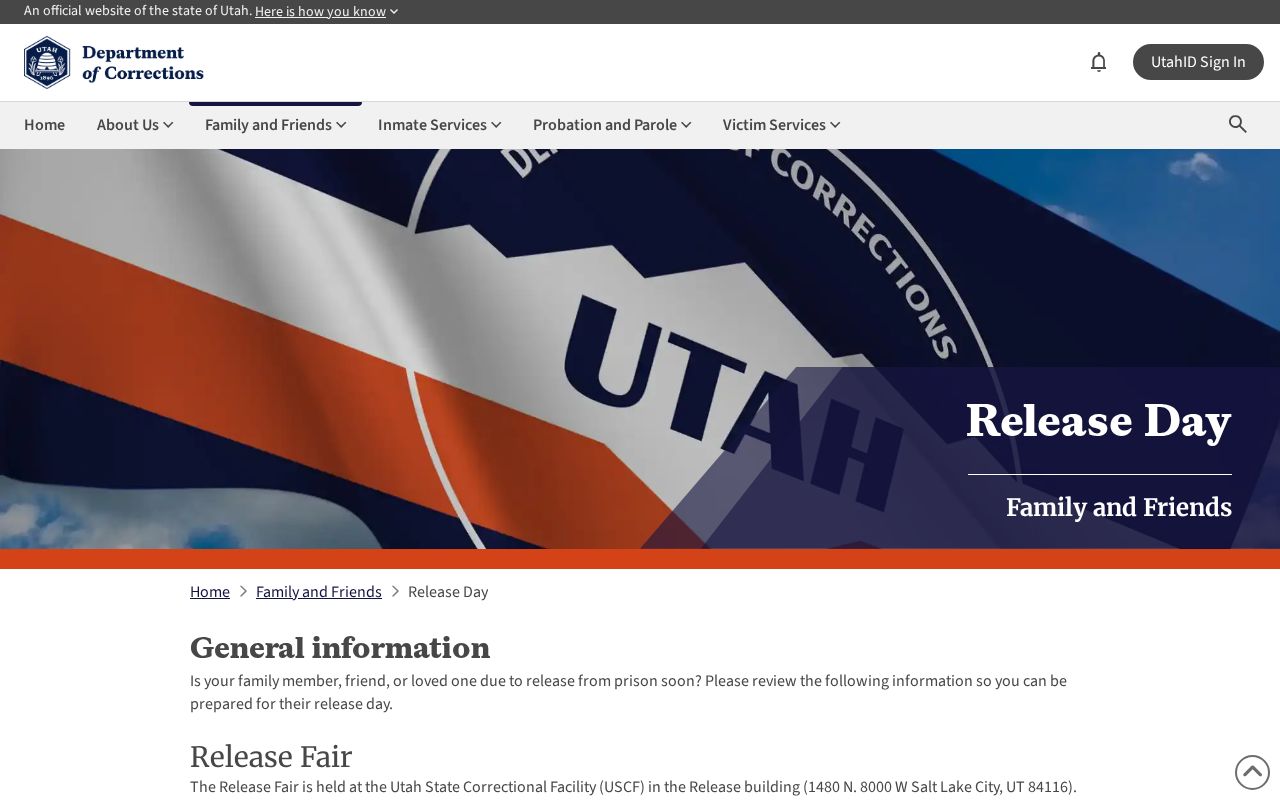
A family pickup plan should follow the current UDC instructions and the Board date, not an assumption about when a transport leaves Juab County.
Juab County Release Capacity
UDC's FY24 jail booklet reports 58 total Juab County Jail beds, including 15 contracted or available UDC beds, with as many as 15 state prisoners regularly housed. Most of those state prisoners were described as having parole dates or awaiting treatment placement. These are dated capacity and contract facts.
They are not annual booking counts, daily population figures, or release totals. They also do not prove a planned expansion was completed. Their value is narrower: they show why a meaningful share of release questions at the Nephi building may belong to UDC rather than the county record system.
Courts Behind Juab County Releases
The court docket explains why a release may have happened, though it may omit the exact jail out time. Juab County Justice Court handles class B and C misdemeanors, ordinances, and infractions. Felonies, class A misdemeanors, and broader district matters go through Fourth District Court. Searching only one court can produce a false “no case” conclusion.
The Juab County Justice Court page identifies the local jurisdiction and links to MyCase and Xchange.
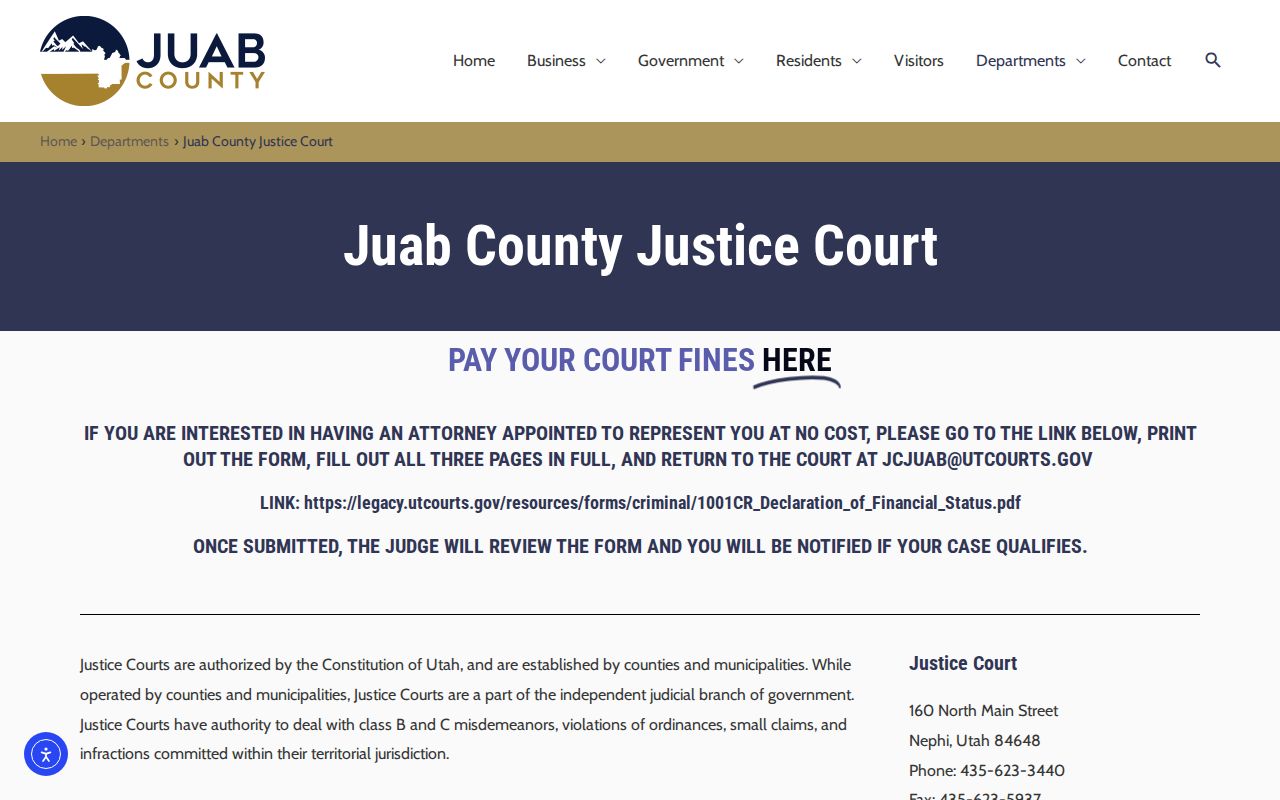
MyCase mainly serves parties, while Xchange is the broader public electronic route subject to court access rules. Clerk access remains the fallback.
Juab County Four-Day Release Checkpoint
Juab County Attorney policy sets a local filing checkpoint for an in-custody suspect. It aims for filing by 3:00 p.m. on the fourth calendar day after booking or within an authorized extension. A weekend or legal-holiday deadline moves under the next-business-day rule. When the office declines or lacks needed information within the period, the policy directs prompt notice to the court and jail to help facilitate release.
This is one possible release path, not an automatic four-day release rule. Another case, hold, extension, sentence, or receiving agency can keep the person confined. Confirm a named event through the court docket and the jail record.
Juab Release Notifications and Federal Records
Utah VINELink supports specific-person UDC custody checks and alerts. Juab County Jail participation is not documented by the sheriff and must be confirmed in the live Utah facility selector. The Utah Board warns that notifications may be inaccurate or missing. Treat an alert as a reason to contact the custodian, and treat silence as no proof.
For federal sentences, the BOP Inmate Locator may show a past release date or “RELEASED.” That means BOP custody ended, not that supervision or another agency's custody ended. Federal pretrial detainees may require the federal court and U.S. Marshals route. ICE's current locator handles qualifying immigration detention, while EOIR reports immigration-court status. A transfer to ICE is not community release.
Search terms differ across those systems. BOP accepts a name or federal register number. ICE recommends a nine-digit A-number with country of birth when available, or biographical information. EOIR needs the immigration case identifier and reports proceedings rather than detention. Record each system's exact wording and access date. “No match,” “not in custody,” and “released” are not interchangeable findings.
The official BOP locator shows the federal search route. BOP's record guide explains its result labels.
The federal wording must be preserved because “not in BOP custody” is narrower than “free from all custody or supervision.”
Juab County Release Status Compared
Use the system that matches both the custody type and the time period. A live jail inquiry answers a current local housing question. A county release record documents the local out event. UDC may continue to show parole or probation after prison release. BOP can retain a former federal result.
| Situation | Where to look | What absence means |
|---|---|---|
| Current local custody | Juab Jail, Option 2 | “Not housed” may be release or transfer |
| Past local release | Sheriff Records and correct court | No web entry is expected because there is no feed |
| UDC incarceration or supervision | UDC search and Board decision | No match may reflect full discharge or mismatch |
| Federal sentence | BOP locator and federal docket | Released from BOP does not end other legal control |
| Immigration custody | ICE locator and EOIR | No result is not a historical release finding |
Can a person be released and still appear in a corrections search? Yes. A parolee has left prison but remains under UDC supervision. A probationer may also appear while serving a community term. Full discharge is a different event.
Juab County Release Facilities
The release map includes the local jail and outside systems that regularly determine where a Juab-connected person goes next. Each facility page follows its own operator and record route.
- Juab County Jail holds local detainees and contract UDC prisoners, which requires two distinct release paths.
- Utah State Correctional Facility is the usual physical state release point for county-housed UDC prisoners.
- Central Utah Correctional Facility is a state prison and Board hearing location, not a Juab jail.
- Federal Bureau of Prisons System supplies the locator for federal sentenced custody and former-federal results.
- ICE / Immigration Custody System handles the separate immigration-custody branch after a detainer transfer.