
Juab Projected Versus Actual Release
A projected date is prospective. It reflects the legal record, current credit, Board action, and release conditions known at that point. An actual release is the completed custody event shown by the responsible agency. Utah Department of Corrections calls the relevant entry on its release instructions a “Parole/Release date.” Its public Offender Search landing page does not promise a field literally titled “Projected Release Date,” so the exact live label must be read before quoting it.
A hearing date is also different. It identifies when the Utah Board of Pardons and Parole will consider a matter. A published decision may later grant a date, deny parole, set a rehearing, require more review, or impose contingencies. Even a granted future date can be rescinded before release. Confirm a state release with the Board order and UDC status on or after the operative date.
For an ordinary Juab County Jail detainee, no official local source publishes a projected-date field. A pretrial person may leave after bond, dismissal, nonfiling, a court order, or another lawful disposition, but a hold can prevent community release. A local sentence date may depend on the judgment, jail credit, concurrent or consecutive terms, and jail policy.
Choose the Juab Release System
The right record follows legal custody, not just the building. Juab County Jail holds ordinary local detainees and also participates in UDC's Inmate Placement Program. A UDC prisoner housed at the Nephi jail remains a state prisoner. That person's dates come from UDC and the Board, even though the physical location is a county facility.
| Custody type | Date source | Final check |
|---|---|---|
| Pretrial Juab detainee | Court docket, bond and custody orders | Juab County Jail Option 2 |
| Local jail sentence | Judgment, jail credit, and jail records | Jail plus the sentencing court |
| UDC prisoner in Juab | UDC record and Board decision | UDC or Board on the operative date |
| UDC parolee | Current UDC legal status and Board order | UDC AP&P or Board |
Leaving the Juab building is not always release. UDC says almost every state prisoner held in a contract county jail is routed to Utah State Correctional Facility for release processing. A move out of Nephi can therefore be a transfer that occurs before a later parole release.
Note: Physical location identifies where someone is held, while legal custody identifies which agency controls the release date and record.
Find a Juab Projected Release Date
Begin with the judgment and identify the custodian. Utah's ordinary felony framework is indeterminate, meaning the court imposes a range while the Board determines release within its authority and applicable minimums. Charge class alone cannot produce a valid date. The offense date, governing statute, sentence, minimum term, credits, and Board record all matter.
- Read the judgment and determine whether the sentence is local jail or UDC custody.
- For UDC custody, search by name or UDC number and open the matching current record.
- Copy the exact label and date shown, including whether it says parole or release.
- Search the Board's hearing and decision system and open the published order.
- Check the order for contingencies, rescission risk, treatment placement, or another hold.
- Confirm with the jail, UDC, or Board on or after the operative date.
The UDC Offender Search covers people currently incarcerated by UDC or on UDC parole or probation. It excludes an unsentenced county-jail detainee and is not a complete historical discharge archive.
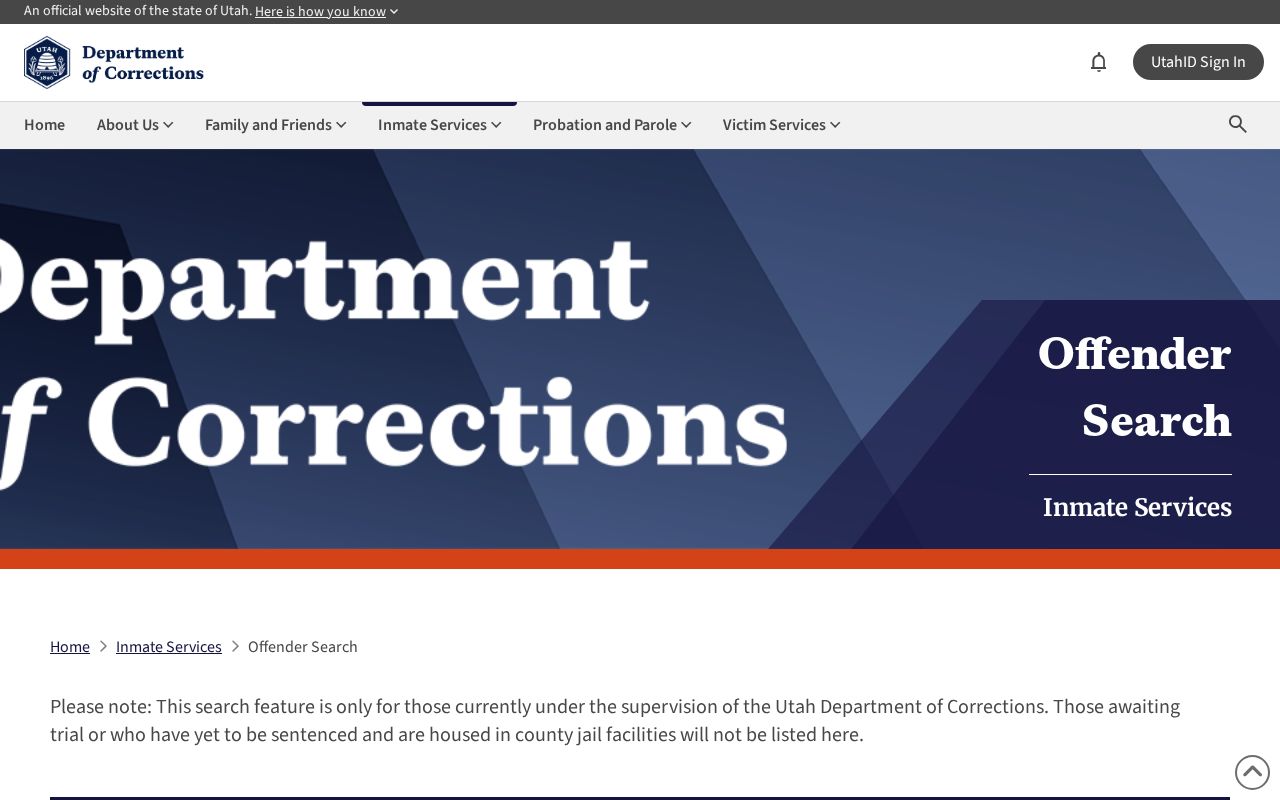
The scope statement on the official search is why a no-match result cannot settle a Juab pretrial case or prove that a former UDC offender was released.
For a local sentence, call Juab County Jail at 435-623-1344 Option 2 and read the court case. Sheriff Records at Option 3 can supply a written custody and release record through GRAMA. Broader search routing is covered in the Juab County released inmate records.
Utah Rules for Juab Release Dates
Utah should not be reduced to a generic rule that every person serves 85 percent. The Utah Sentencing Commission describes an indeterminate system. Common ranges include zero to five years for a third-degree felony, one to fifteen for a second-degree felony, and five years to life for a first-degree felony, subject to offense-specific statutes and enhancements. Those examples describe sentence ranges, not promises of release.
Utah Code section 77-27-9 generally prevents parole before a statutory minimum except under specified authority and preserves special limits for listed offenses. The correct analysis starts with the judgment, offense date, applicable statute, minimum, and Board record. Life without parole and death are outside the ordinary parole framework.
- Indeterminate sentence
- A sentence range in which the Board has release authority within legal limits.
- Parole date
- A Board-controlled date for conditional release into community supervision.
- Expiration
- The point at which the sentence reaches its endpoint.
- Rescission
- Board action that can withdraw a previously granted future parole date.
These terms keep separate the earliest legal possibility, a hearing, a granted date, the physical release, and final discharge. Mixing them can turn a tentative event into a false statement about current custody.
Juab Release Dates and Earned Time
Utah Code section 77-27-5.4 authorizes earned-time programs. UDC explains that qualifying completion of as many as two approved case-action-plan programs can result in mandatory four-month cuts, for a maximum of eight months. A second or later vocational program can support a discretionary cut, while exemplary performance or added accomplishments may support a recommendation.
Completion does not mean a person can subtract months from the sentence and announce a new date. UDC documents the work, and the Board applies a cut within governing limits. A person who completes a program before receiving a release date may get acknowledgment for later Board review rather than an immediate mathematical change.
The UDC earned-time program page explains the available cuts and restrictions.
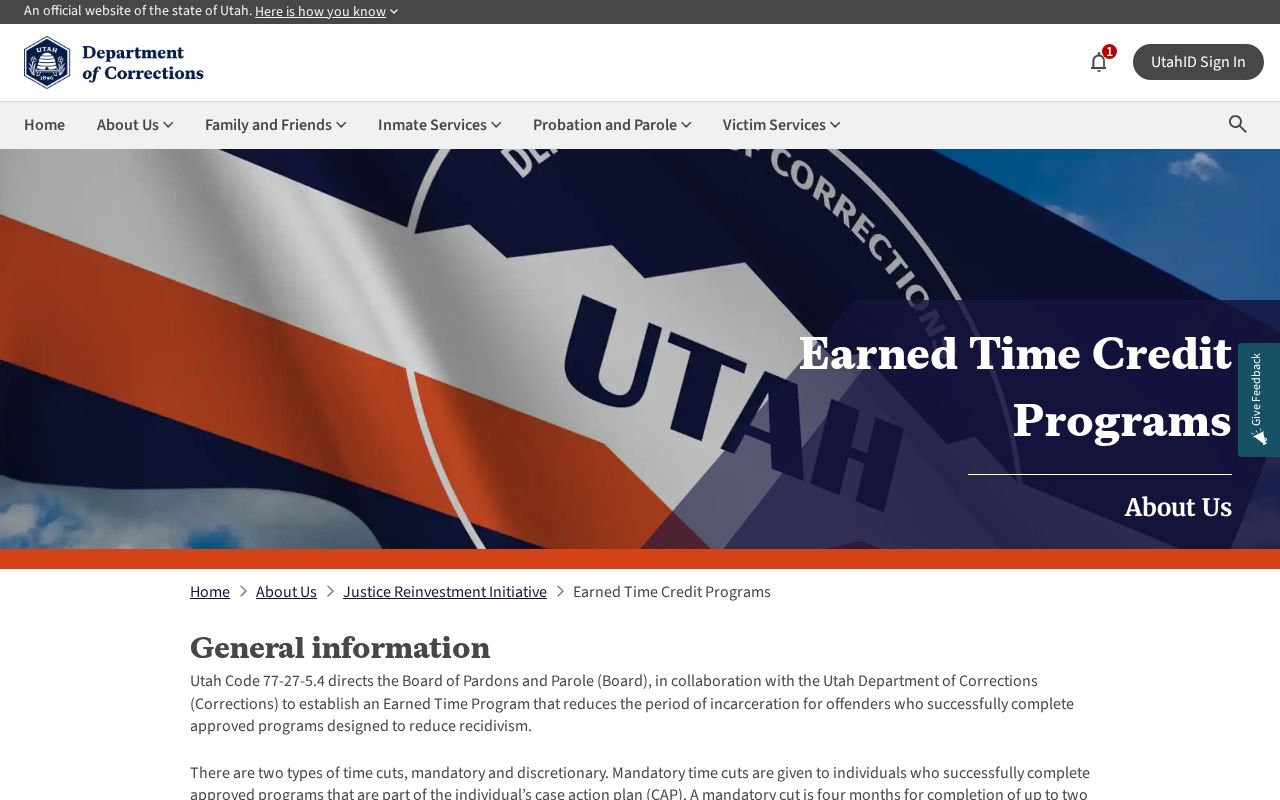
The official program details show why earned time is a Board-administered process rather than a universal good-time formula.
Limits include life without parole, a Board order to expire a life sentence, no current release date, and unmet release contingencies. A major disciplinary infraction, new charges, or rescission circumstances can affect or forfeit credit. When a date leaves too little transition time, the Board may apply only the portion that fits.
Note: No official Juab source establishes a local good-time formula or weekend-release rule, so UDC earned time must not be applied to a county sentence.
Why Juab Release Dates Change
A release date can move because several records change at different stages. Court corrections may alter the sentence or credit. UDC may document earned time or discipline. The Board may grant, defer, revise, or rescind a date. A receiving agency can also act on a detainer. Each change should be traced to its source instead of inferred from an older screen.
| Factor | Possible effect | Record to check |
|---|---|---|
| Earned-time approval | May reduce a current Board date within legal limits | UDC record and Board order |
| Discipline or new charge | May forfeit credit or trigger review | UDC status and Board action |
| Concurrent or consecutive terms | Changes how sentence time is calculated | Judgment and sentence records |
| Sentence correction | Can alter the controlling legal term | Court docket and amended judgment |
| Release-plan contingency | May delay parole until a required plan is approved | Board decision |
| Detainer or hold | May send the person to another custodian | Custody and receiving-agency records |
| Rescission | Can withdraw a granted future date | Board hearing and decision record |
A favorable court order does not defeat another active hold. Likewise, a UDC release can mean parole rather than discharge. Parole is conditional release while the sentence and supervision continue. Termination or expiration marks a later endpoint.
Juab County Sentence-Date Limits
A local jail sentence does not use UDC earned-time rules by default. The court's judgment supplies the term, while jail credit may account for time already served. Concurrent terms run together when the order provides for that structure. Consecutive terms run one after another. The actual computation should come from the sentencing record and Juab County Jail, not from a general online calculator.
No official Juab source states a county good-time formula, weekend-release policy, standard release hour, or holiday adjustment. The absence is meaningful. It prevents a precise public estimate from being built out of practices reported by another Utah jail. Call Jail Option 2 for the current custody question, then use the court docket for the legal term and Sheriff Records for the completed out event.
Pretrial custody follows a different clock. Bond action, filing decisions, court orders, and holds can alter the path, but there is no sentenced projected date to calculate. A court order may explain why release became lawful without proving the minute the person left. Another case or detainer can keep the person confined after a favorable result. Final confirmation still belongs to the jail.
Juab State Release Day Routing
UDC centralizes most state parole and release processing at Utah State Correctional Facility. Its current procedure says releases are processed on Tuesdays. People housed at USCF or CUCF arrive for the Release Fair at 9:00 a.m., while people coming from county jails arrive at 10:00 a.m. Processing may last one to four hours. These are UDC logistics, not Juab County Jail's ordinary release schedule.
The UDC Release Day page documents the Tuesday process and routing for county-housed state prisoners.
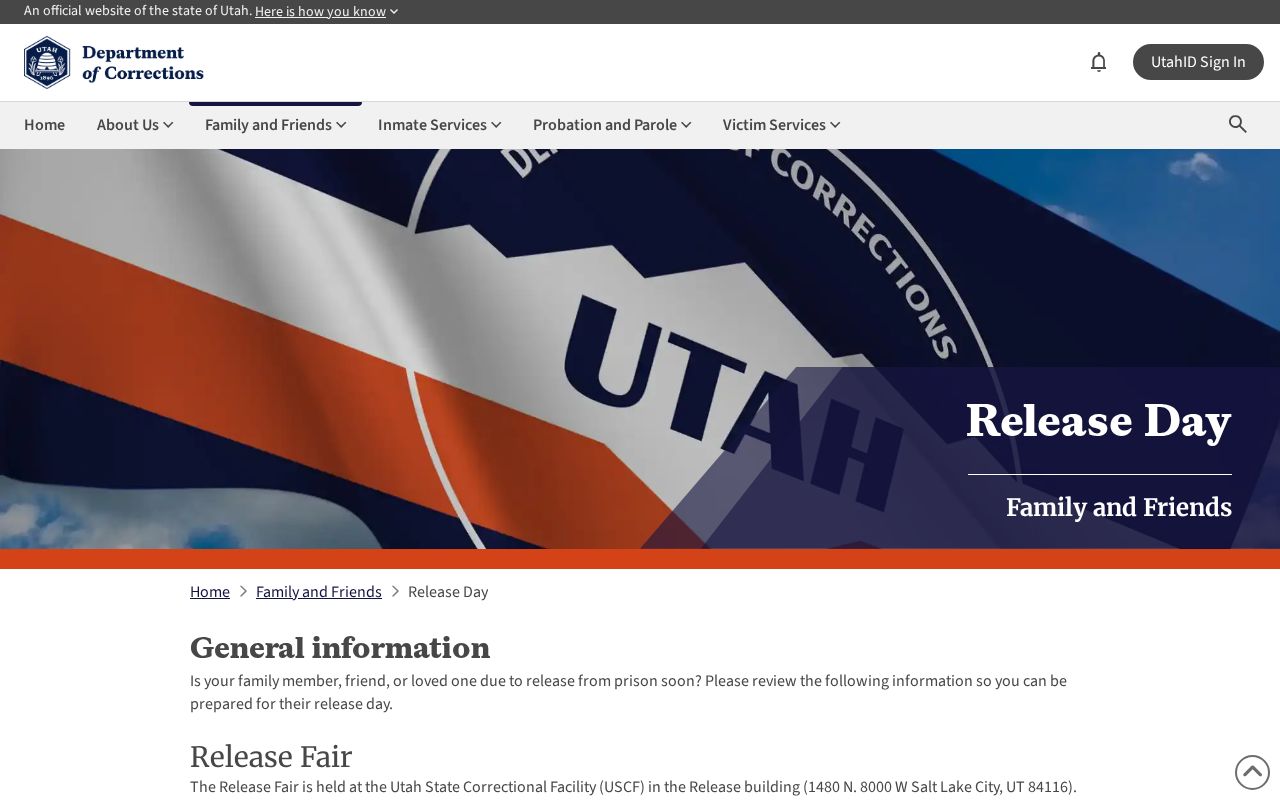
This route explains why a UDC prisoner can leave Juab County Jail before the final release event is processed in Salt Lake City.
UDC may transport a person to a community correctional center. For someone without a ride, release staff or a volunteer may provide limited case-by-case transport to nearby TRAX, and those without rides are processed last. None of these details may be applied to an ordinary Juab detainee because the sheriff publishes no matching local schedule, exit, or transport procedure.
Confirm a Juab Release Date
Read the Board decision, not just the calendar entry. The Board hearing and decision search accepts first and last name or offender number, and it can also search date ranges. A scheduled hearing identifies a review event. The later published order provides the outcome and any conditions.
Then check current UDC status on or after the operative date. If confirmation is still needed, call the Utah Board at 801-261-6464. A pending VINELink notification may help with timing, but the Board warns that alerts can be inaccurate or missing. Registration instructions appear on the VINELink Check page.
For Juab local custody, confirm directly with Jail Option 2 and the court. Ask Sheriff Records for the release date and time, authority or disposition, and any destination or receiving agency that can lawfully be disclosed. A precise answer comes from the completed custody event, not a self-calculated estimate.
Note: Record the exact date label and access time so a later change can be reconciled with the controlling order.