
Juab County Parole vs Probation
Utah courts place people on probation. The Utah Board of Pardons and Parole releases state prisoners on parole. Utah Department of Corrections Adult Probation and Parole, usually shortened to AP&P, supervises both statuses in the community. That shared supervisor can obscure the legal difference, but the source and meaning of each status remain distinct.
| Point | Parole | Probation |
|---|---|---|
| Who orders it | Utah Board of Pardons and Parole | The sentencing court |
| Custody history | Conditional release from state prison | Community status that may follow jail or suspended confinement |
| Who supervises | UDC Adult Probation and Parole | UDC Adult Probation and Parole |
| Where to verify | UDC Offender Search plus the Board decision | UDC Offender Search plus the court order |
| What it is not | Complete discharge from the sentence | Proof that the person served a prison term |
A person on parole has been released from prison, but not necessarily from all legal control. A probationer may have avoided prison, completed a local jail term, or continued under suspended terms. Neither label proves that every obligation has ended. The current record, order, and custodian must be read together.
Note: The shared AP&P supervisor does not make parole and probation interchangeable legal statuses for any Juab County person.
Verify Juab County Post-Release Supervision
The public starting point is the UDC Offender Search. It covers people currently incarcerated by UDC or currently on UDC probation or parole. It does not cover an ordinary unsentenced Juab County Jail detainee, and it is not promised as a complete archive of people whose supervision has ended.
- Choose a name or UDC offender-number search. A name search needs at least one letter of both first and last name.
- Open the possible match and compare available identifiers before relying on its legal status.
- Read whether the current status is incarceration, parole, or probation. A parole entry confirms release from prison into supervision, not full discharge.
- For parole, search the Board hearings and decisions by first and last name or offender number, then open the later decision or order.
- For probation, read the sentencing and later orders in the correct court case. Juab Justice Court and Fourth District Court cover different case classes.
- If verified office help is needed, contact AP&P Region 4 Richfield. Do not seek private case notes, residence data, or an individual officer's personal details.
If no UDC result appears, do not turn the absence into a discharge finding. It can reflect a name mismatch, timing, another jurisdiction, or completed termination or expiration. A Board order, UDC records request, or court docket may preserve the history after current-supervision search coverage ends. The full county-jail and state-record paths are explained on the Juab County released-inmate search page.
Juab County AP&P Region 4 Office
Juab County has no listed standalone Nephi AP&P office. The official supervising location is the Region 4 Richfield Office, which also serves Garfield, Millard, Piute, Sanpete, Sevier, and the west half of Wayne County. Use the UDC search first so an office call concerns a verified current-supervision record.
AP&P Region 4 Richfield Office
835 East 300 North, Suite 500
Richfield, Utah 84701
435-896-2770
UDC AP&P division: 801-545-5908
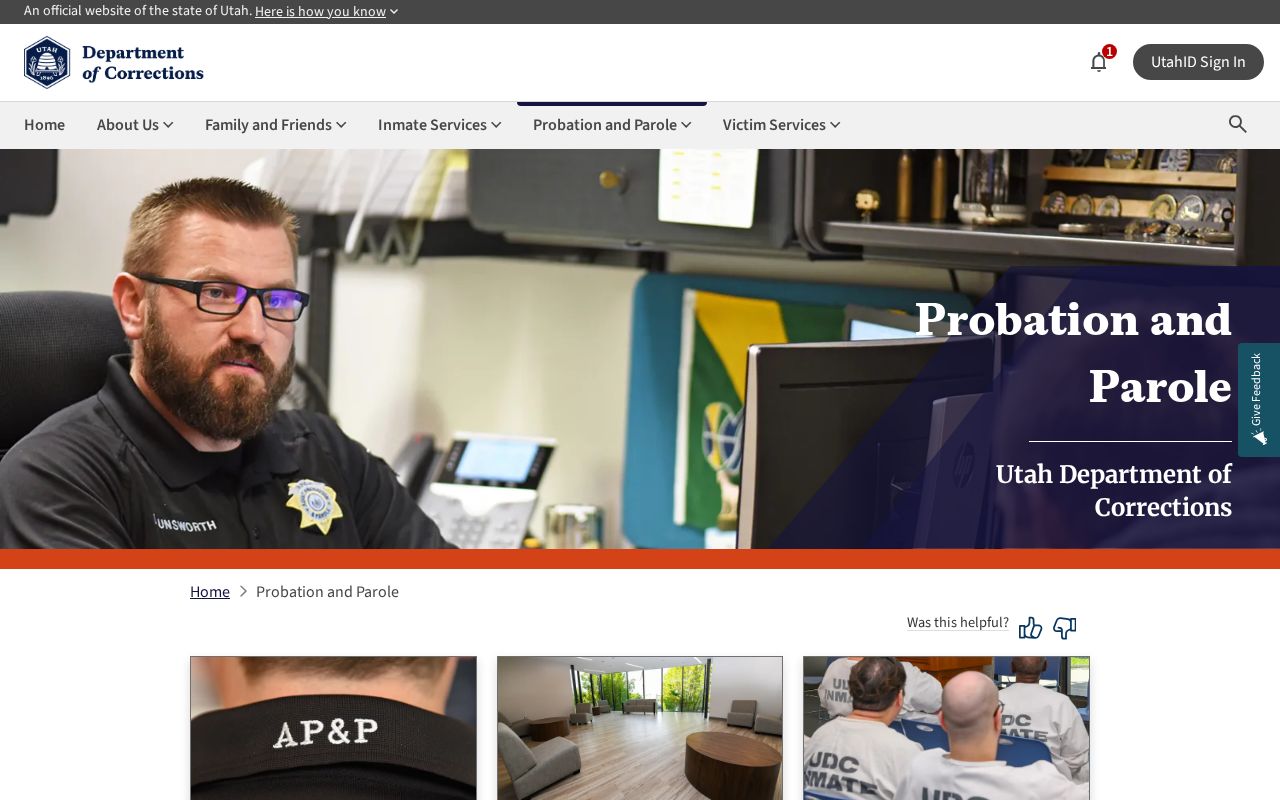
The official AP&P page shows how the division works and identifies the regional office serving Juab County.
Juab County Parole Violations and Custody
Conditions come from the controlling court or Board order and are managed through supervision. Public sources do not promise access to case notes, a person's address, or detailed officer information. The useful records-level question is whether an order, warrant, violation proceeding, or current custody event has changed the person's status.
Under Utah Code §77-27-11 and related Board procedure, an alleged parole violation can lead to detention while the allegation is addressed. A person may therefore remain legally on parole while physically back in Juab County Jail or another facility. The older parole grant does not prove present community status. Check the current custodian, UDC status, and the newest Board order.
No separate public AP&P absconder locator was verified for Juab County. A missing current-supervision result does not prove absconding, and the term should not be inferred from a failed name search. For a public warrant question, use the responsible court and agency rather than guessing from disappearance online.
Utah Board records also distinguish the kind of proceeding. A parole-violation hearing addresses conduct after release, while a rescission hearing can affect a granted date before release occurs. An evidentiary hearing, rehearing, or paper review has its own purpose. Read the event label and the resulting order before describing a person's status.
Current physical custody and legal supervision can overlap. When Juab County Jail confirms that a person is housed, that answer does not by itself cancel an existing parole status. Conversely, a Board order showing parole does not prove the person remains outside a facility after a later alleged violation. Use both records and note which one is newer.
How Juab County Supervision Ends
Utah distinguishes parole, termination, and expiration. Parole is conditional release while sentence and UDC supervision continue. Under the Board framework, termination can conclude parole or the sentence before ordinary expiration, while expiration means the sentence has reached its endpoint. Probation ends through the terms and orders of the sentencing court.
A fully discharged person may no longer appear in UDC's current-supervision search. For parole history, preserve or request the Board order and UDC legal-status record. For probation, read the court docket for completion, termination, or other controlling entries. A release date alone is not a discharge date when supervision continued after custody.
Utah Code §77-27-9 supplies the Board's parole and termination authority within Utah's indeterminate sentencing system. It does not create a universal percentage at which release or discharge must occur. The judgment, offense law, applicable minimum, and Board action control the individual case.
The public record trail differs when supervision ends. A later Board termination or expiration record supports the parole conclusion. A court entry controls probation completion. If the online offender search no longer returns the person, request the underlying record rather than treating the missing result as evidence by itself. Search access can end while the historical government record remains.
Note: A custody release date can precede the end of supervision by a substantial period in the same case.
Juab Jail's UDC Placement Distinction
Juab County participates in UDC's Inmate Placement Program. That creates a local distinction that matters more than the building address: an ordinary county detainee and a UDC prisoner can both be held at Juab County Jail, yet their release and supervision records belong to different systems.
UDC's fiscal-year 2024 jail booklet reports 58 total Juab beds, 15 contracted or available UDC beds, and as many as 15 state prisoners regularly housed there. The booklet says most Juab state inmates had parole dates or awaited treatment placement. Those numbers describe capacity and placement, not annual releases.
A county departure for a UDC prisoner is often a transfer in the state release process, not a walk out of the Nephi jail into the community. UDC says almost all state prisoners housed in county jails are routed to Utah State Correctional Facility for release. Follow UDC, the Board order, and AP&P for that person. Use Sheriff Records and the court for an ordinary Juab detainee.
Note: Physical location in the Juab jail does not determine which agency owns the person's release record.
Juab County Parole Decision Records
The Board search separates a scheduled event from its eventual result. It accepts a person's first and last name or offender number, and known aliases may match. A date-range search can show upcoming hearings or past decisions. Pop-ups must be enabled to view results.
The Board lists original hearings, parole-violation hearings, evidentiary hearings, rehearings, redetermination, rescission, paper review, and special attention. An original hearing considers possible release before maximum expiration. A rescission hearing can withdraw a date that had already been granted. A violation process can return someone who was released to custody.
The official Board search is the place to distinguish the calendar entry from the published order.
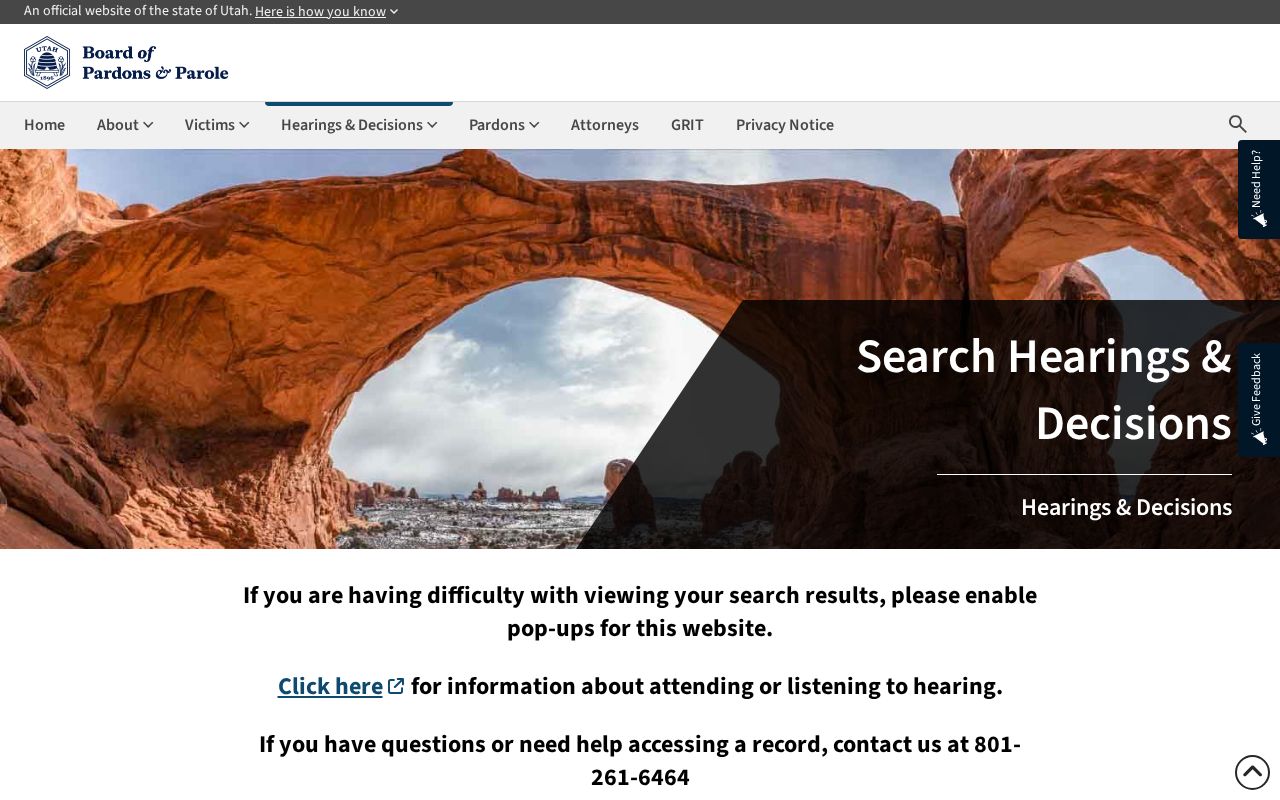
A hearing date is not a release date. Board decisions are generally issued after the proceeding, and a future granted date can still change. The sound chain is hearing entry, published decision, UDC status on or after the operative date, then Board confirmation at 801-261-6464 when exact status matters.
Board materials describe original-hearing dates as being set after arrival and explain that decisions usually follow rather than being issued on hearing day. That timing matters when a search result displays a hearing but no order. Wait for the published decision, note any contingencies, and then compare it with the current UDC record. The Board decides how long a person serves within Utah's indeterminate framework, subject to the judgment, statutory minimums, and offense-specific law.
Utah VINE adds notice, not adjudication. UDC documents alerts for release, a parole-release date notice, transfers, escape and return, death, and correctional-center movements. The Board homepage currently warns that notices may be inaccurate or missing. An alert should trigger a new check with UDC or the Board, and silence should never be read as proof that no release or transfer occurred.
For urgent verified status, the Board directs callers to 801-261-6464. Keep the question limited to the public status or operative order. A scheduled hearing, an old granted date, and an active parole record can each describe a different point in the same case.
Live-hearing information adds another check but not another decision. The Board describes Salt Lake streams generally running Monday through Thursday and the Gunnison stream on Tuesdays. The person search identifies the calendar and location. Listening to or finding a calendar event still does not replace the written decision that follows.